

tamerasteele17
tamerasteele17
Should i Pay PMI or Take a Second Mortgage?
When you secure your home mortgage loan, you might wish to consider securing a second mortgage loan in order to prevent PMI on the first . By going this route, you could potentially save a good deal of money, though your in advance costs may be a bit more.
Presume the home you are interested in is valued at $400000.00 and you are prepared to put down $20.00 as a down payment. With a basic 30-year loan, a rate of interest of 6.000% and 1.000 point(s), you will have to pay $4,820.00 in advance for closing and your deposit. This would leave you with a month-to-month payment of $2,308.38. In the end, at the end of your 30-year term you will have paid $790,206.74 to purchase your home.
If you choose a 2nd mortgage loan of $40,000.00 you can prevent making PMI payments entirely. Because it includes getting 2 loans, nevertheless, you will need to pay a bit more in upfront costs. In this circumstance, that totals up to $8,520.00.
Your monthly payments, nevertheless, will be a little LESS at $2,226.96.

And, in the end, you will have paid only $736,980.58 – that’s an overall SAVINGS of $53,226.17!
See Today’s Best Rates in Buffalo
Should I Pay PMI or Take a 2nd Mortgage?
Is residential or commercial property mortgage insurance (PMI) too costly? Some property owner acquire a low-rate second mortgage from another lending institution to bypass PMI payment requirements. Use this calculator to see if this option would save you cash on your mortgage.
For your convenience, current Buffalo very first mortgage rates and current Buffalo 2nd mortgage rates are published listed below the calculator.
Run Your Calculations Using Current Buffalo Mortgage Rates
Below this calculator we publish existing Buffalo first mortgage and 2nd mortgage rates. The first tab shows Buffalo very first mortgage rates while the second tab reveals Buffalo HELOC & home equity loan rates.
Compare Current Buffalo First Mortgage and Second Mortgage Rates
Money Saving Tip: Lock-in Buffalo’s Low 30-Year Mortgage Rates Today
Current Buffalo Home Equity Loan & HELOC Rates
Our rate table lists present home equity uses in your area, which you can use to find a regional loan provider or compare against other loan choices. From the [loan type] choose box you can choose between HELOCs and home equity loans of a 5, 10, 15, 20 or 30 year period.

Down Payments & Residential Or Commercial Property Mortgage Insurance
Homebuyers in the United States generally put about 10% down on their homes. The advantage of creating the hefty 20 percent deposit is that you can get approved for lower rate of interest and can leave needing to pay personal mortgage insurance coverage (PMI).
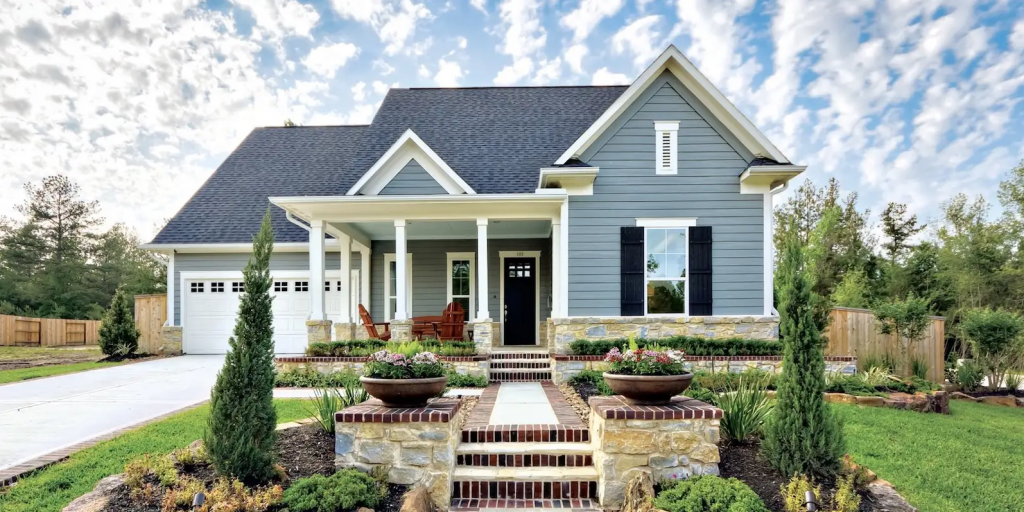
When you purchase a home, putting down a 20 percent on the first mortgage can assist you conserve a lot of money. However, few people have that much money on hand for just the deposit – which has actually to be paid on top of closing costs, moving expenses and other costs connected with moving into a new home, such as making remodellings. U.S. Census Bureau information reveals that the typical expense of a home in the United States in 2019 was $321,500 while the average home cost $383,900. A 20 percent down payment for a mean to average home would run from $64,300 and $76,780 respectively.
When you make a down payment below 20% on a standard loan you have to pay PMI to protect the lender in case you default on your mortgage. PMI can cost numerous dollars every month, depending upon just how much your home cost. The charge for PMI depends upon a range of aspects including the size of your down payment, but it can cost in between 0.25% to 2% of the initial loan principal per year. If your preliminary downpayment is listed below 20% you can ask for PMI be eliminated when the loan-to-value (LTV) gets to 80%. PMI on standard mortgages is immediately canceled at 78% LTV.
Another method to leave paying private mortgage insurance coverage is to take out a second mortgage loan, also referred to as a piggy back loan. In this situation, you get a main mortgage for 80 percent of the selling price, then secure a 2nd mortgage loan for 20 percent of the asking price. Some second mortgage loans are only 10 percent of the asking price, needing you to come up with the other 10 percent as a down payment. Sometimes, these loans are called 80-10-10 loans. With a 2nd mortgage loan, you get to fund the home 100 percent, however neither loan provider is funding more than 80 percent, cutting the requirement for personal mortgage insurance.
Making the Choice
There are lots of advantages to selecting a second mortgage loan instead of paying PMI, however the ultimate option depends upon your personal monetary circumstances, including your credit history and the worth of the home.
In 2018 the IRS stopped enabling homeowners to deduct interest paid on home equity loans from their income taxes unless the debt is considered to be origination financial obligation. Origination financial obligation is debt that is gotten when the home is initially acquired or debt gotten to develop or considerably improve the property owner’s dwelling. Make certain to examine with your accountant to see if the second mortgage is deductible as numerous 2nd mortgage loans are issued as home equity loans or home equity credit lines. With credit limit, once you pay off the loan, you still have a line of credit that you can draw from whenever you need to make updates to your house or dream to combine your other financial obligations. Dual purpose loans may be partially deductible for the portion of the loan which was utilized to develop or improve the home, though it is essential to keep invoices for work done.
The drawback of a second mortgage loan is that it might be more challenging to qualify for the loan and the rate of interest is likely to be greater than your primary mortgage. Most loan providers need applicants to have a FICO rating of a minimum of 680 to get approved for a second mortgage, compared to 620 for a primary mortgage. Though the 2nd mortgage may have a slightly greater rates of interest, you may be able to receive a lower rate on the primary mortgage by coming up with the „down payment“ and eliminating the PMI.
Ultimately, cold, hard figures will best help you make the decision. Our calculator can help you crunch the numbers to figure out the ideal choice for you. We compare your yearly PMI expenses to the expenses you would pay for an 80 percent loan and a second loan, based on just how much you make for a down payment, the interest rates for each loan, the length of each loan, the loan points and the closing expenses. You get a side-by-side contrast revealing you what you can save each month and what you can save in the long run.